A document no one was supposed to see.
The Blanton's 2024 Annual Fund needed to make donors feel the urgency of conservation, not just understand it. The challenge of an end of year giving campaign is always the same:
Cut through the seasonal noise
Make the ask feel specific and urgent
Give people a reason to choose us
I found the key to telling that story in an internal condition report covered in a registrar's handwritten notes, rebuilt it into something beautiful, and made it the heart of a campaign that gave donors a reason to stay invested long after the mailer hit their mailboxes.
The Challenge
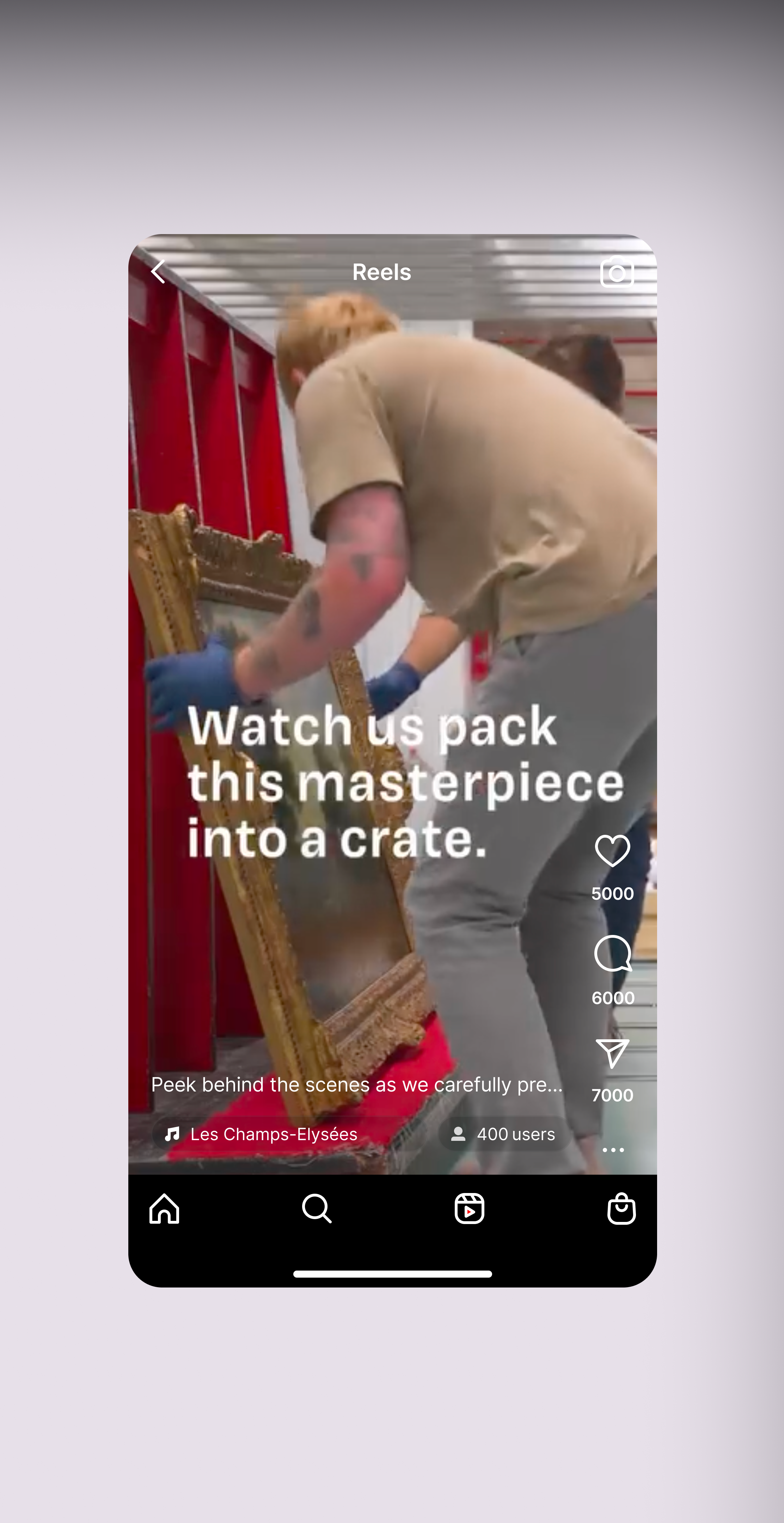
In 2024, the Blanton Museum of Art's annual fundraising campaign set out to do something unusual for a direct mail appeal: tell a single, specific story. Rather than a broad conservation ask, the team decided to focus the entire campaign on one work — Pastoral Landscape by Claude Lorrain (circa 1628–1630), in need of immediate conservation attention. The goal was $25,000. The challenge was making that story feel urgent, intimate, and worth a donor's attention in print.
Direct mail is easy to ignore. For a museum campaign asking donors to fund the conservation of a 400-year-old painting, the risk was that the piece would feel dutiful rather than compelling. The team needed something that could make a donor stop, feel the stakes, and understand why this painting, why now.
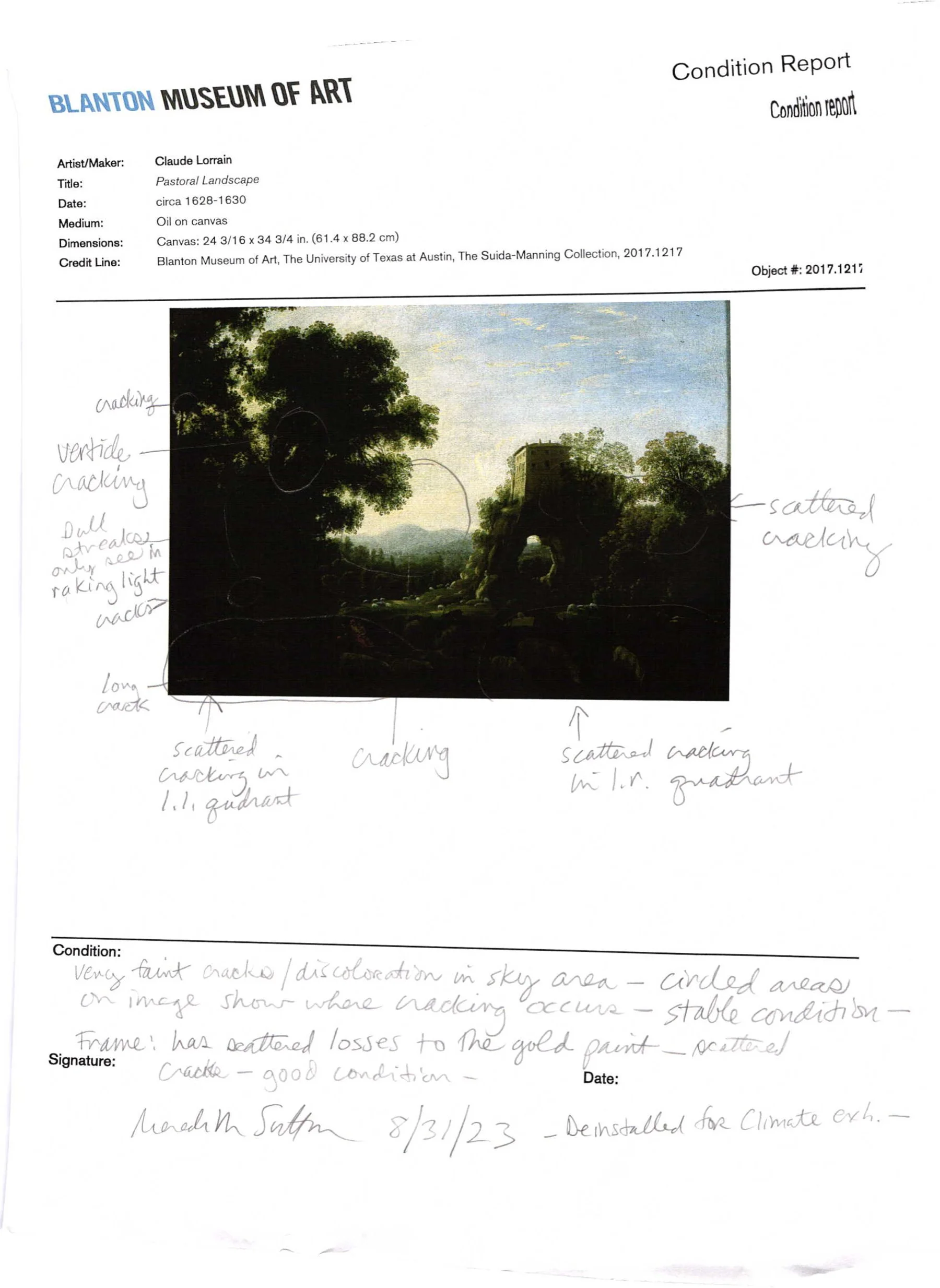
THE ORIGINAL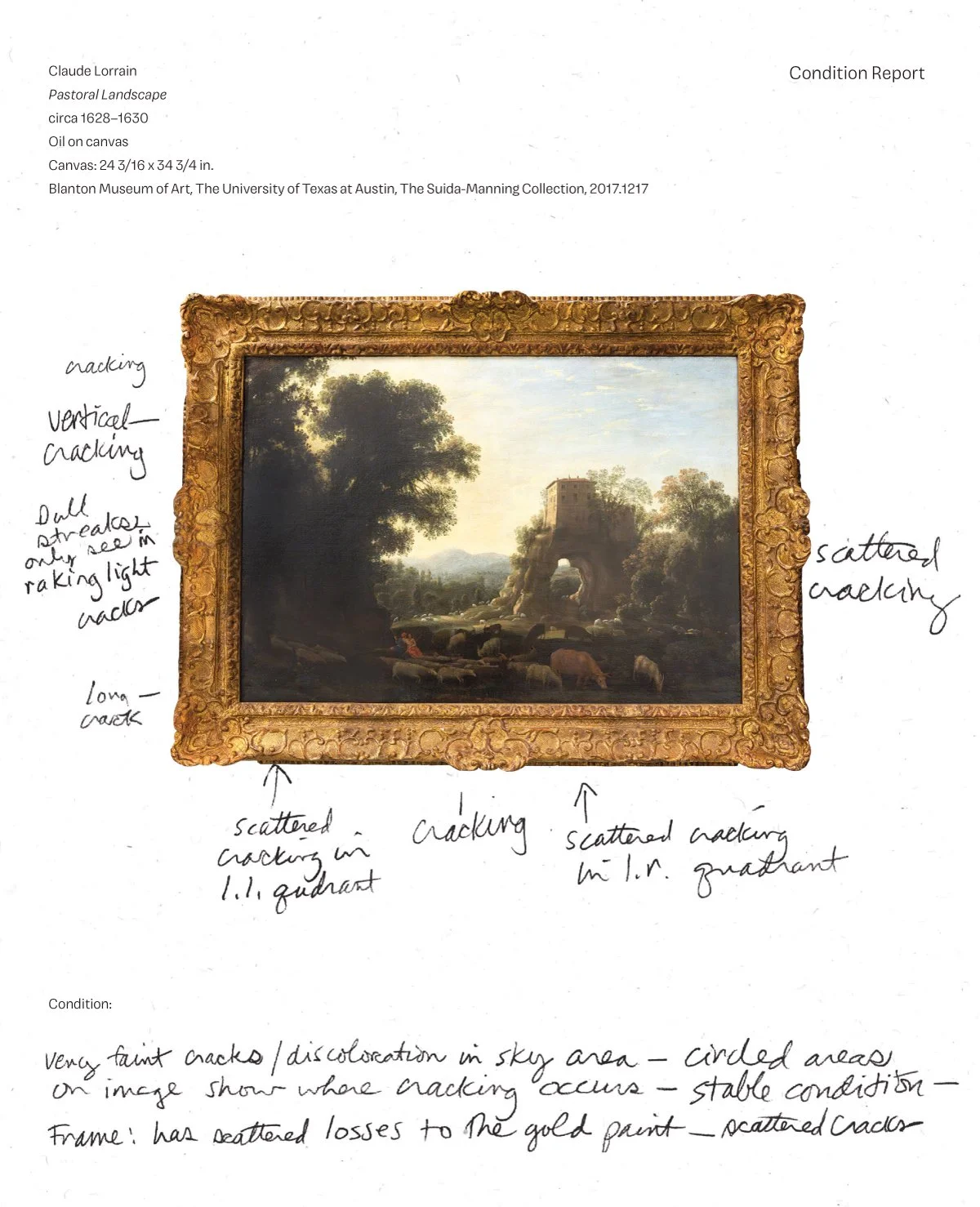
THE GLOW UPThe Insight
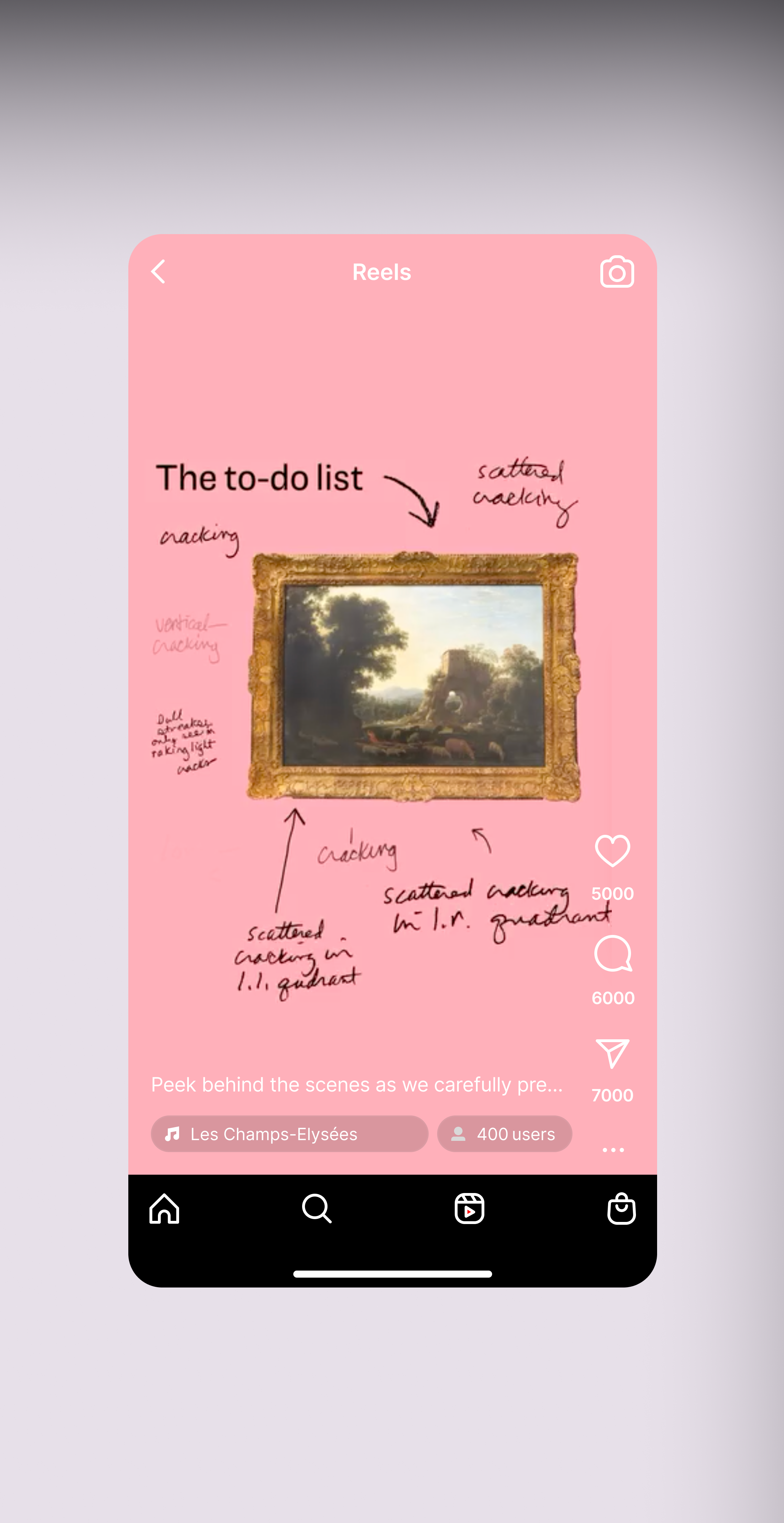
While researching assets for the project, searching internal files by object number, a condition report surfaced. It was an internal document, never intended for public audiences: a scanned form with the registrar's handwritten annotations mapping the painting's vulnerabilities:
Cracking.
Discoloration.
Losses to the gold frame.
Signed and dated by the registrar.
It was exactly the story we needed to tell, in the most unpolished, unguarded form imaginable. The question wasn't whether to use it, it was whether it could be transformed into something a donor would actually want to look at.
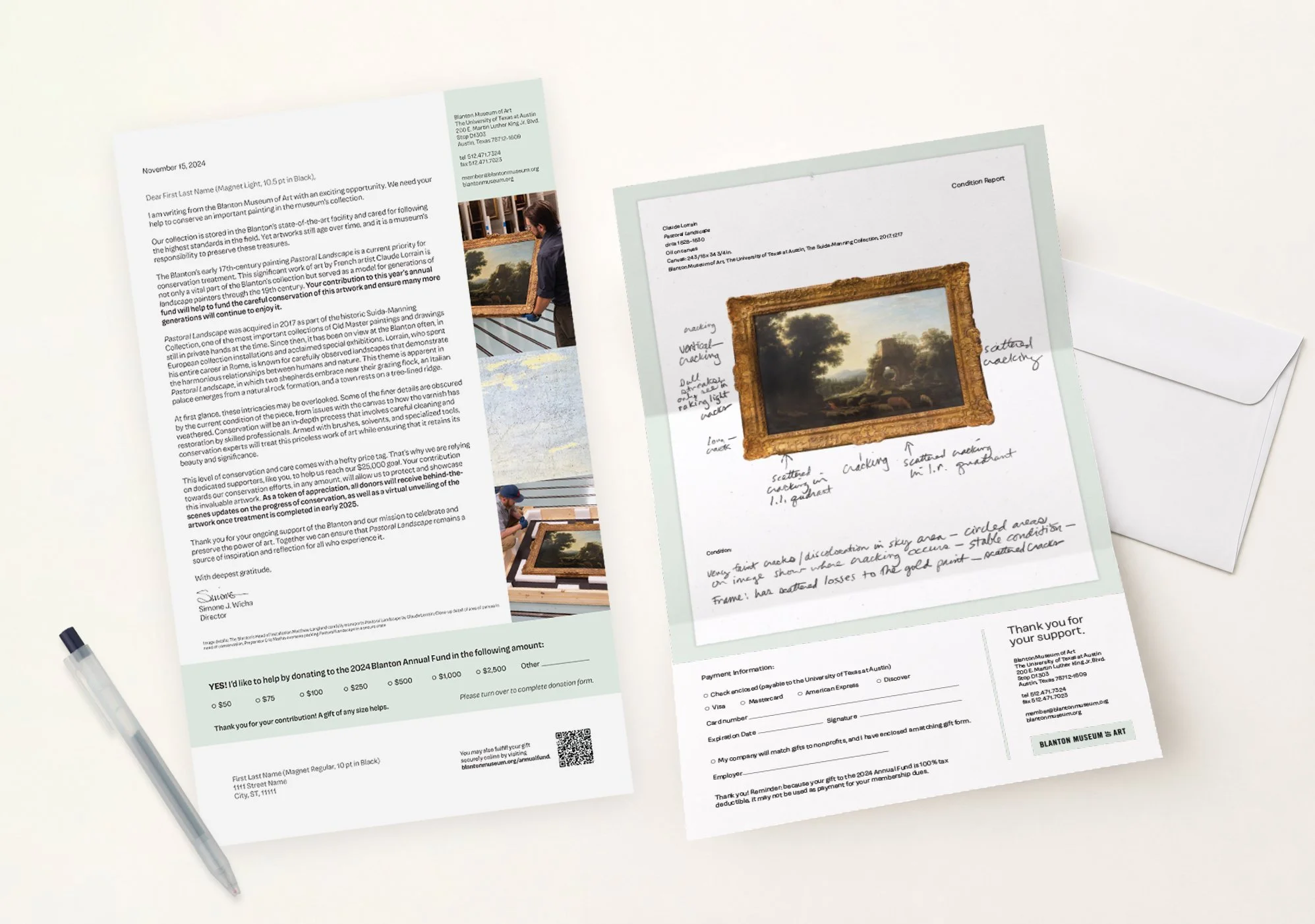
The Solution
Rather than describing the painting's condition, the mailer showed it through the registrar's own eyes, in her own words. The condition report became the hero visual for the back panel of the mailer. The original document was dark, smudged, crooked, and carried outdated branding, an internal record, not a designed artifact.
I replaced the darkened reproduction with the official object photography, extract and retouch the registrar's handwritten annotations to make them legible without losing their character, and reconstruct the document's supporting elements in current brand typography, keeping it feeling as real and unmediated as possible.
I built proof of concept before the idea was pitched. Leadership needed to see it, not hear about it. The concept only worked if the execution worked. Once they did, the response was immediate.
Because the document contained internal assessment notes not created for public consumption, the registrar was consulted directly and her comfort confirmed. The head of collections reviewed for any liability or insurance concerns, a necessary step in a museum context where behind-the-scenes documentation carries real institutional weight.
Campaign Impact
The direct mail piece functioned as the narrative anchor for a campaign that extended well beyond the initial ask. Conservation update videos kept donors invested in the painting's progress. A curator-led gallery talk gave supporters direct access to the work once treatment was complete. In a channel that often functions as a formality or a box checked in a multichannel campaign, this mailer stood on its own as genuinely interesting media.
The result was a campaign that felt less like a fundraising drive and more like an invitation into the museum's inner life. It performed in donations, donor engagement, and the kind of response that's harder to quantify: people who felt like they'd been let in on something.
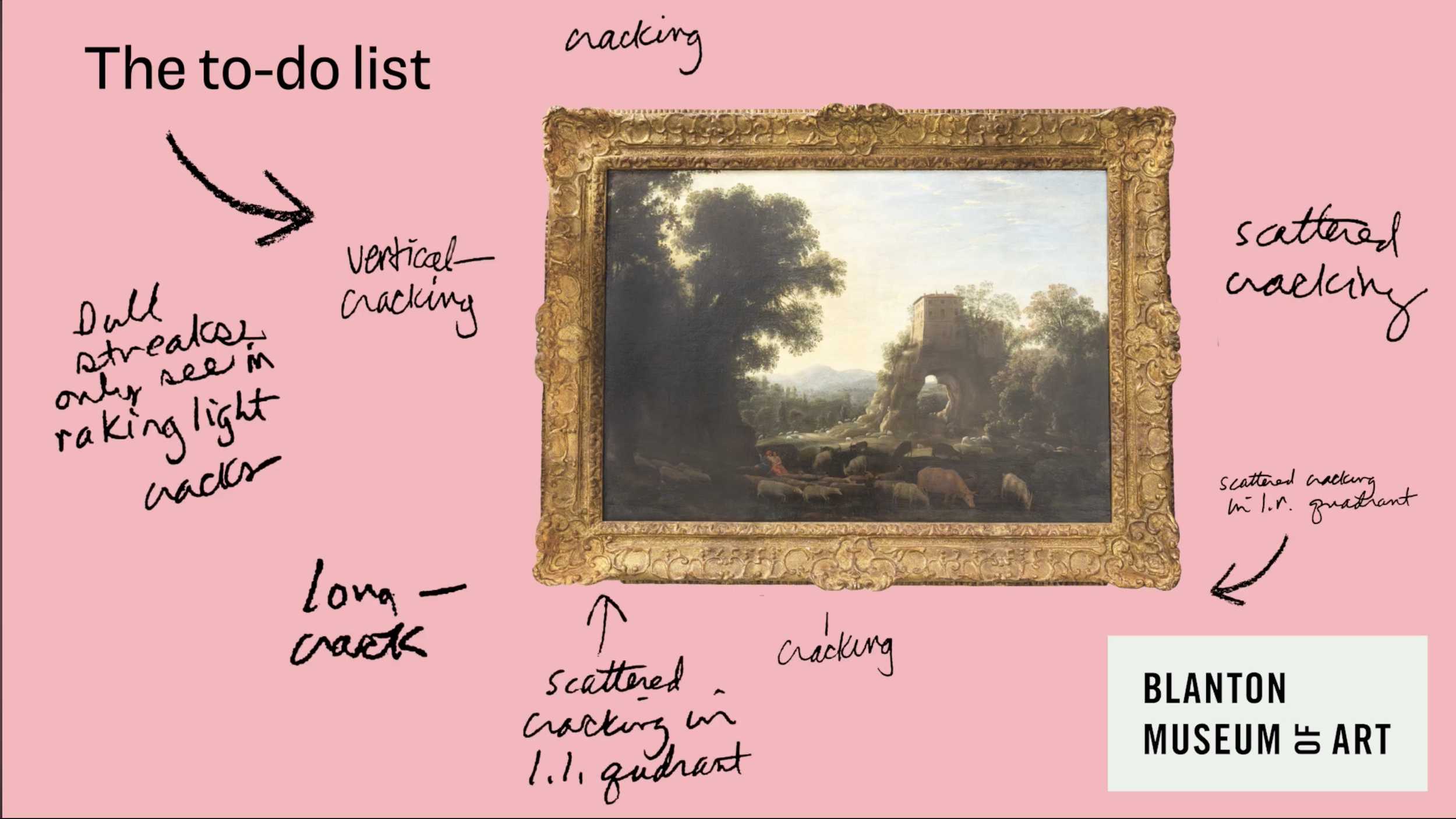
Scope of Work
Creative concept and design for direct mail
Document reconstruction and design of condition report centerpiece
Email design for end-of-year giving campaign series
Art direction for cross-channel media
Project Team
Blanton Creative & Strategy Lead: Jennifer Lioy
Blanton Director of Marketing: Carlotta Stankiewicz
Blanton Senior Digital Content Manager: Lizabel Stella
Blanton Senior Media Producer: Manny Alcala